


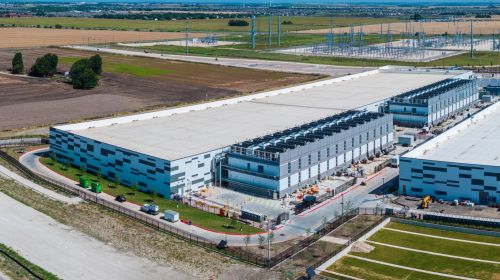
U.S. data centers offer exposure to the physical infrastructure behind cloud computing and digital services. A syndicated investment lets multiple investors pool capital to acquire or develop a facility, usually through a limited partnership (or a limited liability company taxed as a partnership) or a real estate investment trust (REIT). For a non-U.S. investor, the commercial opportunity is only half the analysis: the vehicle determines how income, disposals, withholding and U.S. filing obligations work.
Because of the scale of these projects, direct investment in data centers by any but the largest corporations is infeasible. Pooling capital can provide access to projects, operators and users. An investor may participate in contractual rent, potential appreciation and portfolio diversification without managing the building directly.
A partnership may offer negotiated economics, including preferred returns and allocations, and closer participation in a particular project. A REIT generally offers an equity interest in a larger property vehicle; a publicly traded REIT may be more liquid than a private partnership, while a private REIT may be just as difficult to exit.
Partnerships and LLCs. A partnership generally passes taxable items to its partners. An overseas partner allocated income from a U.S. business may owe U.S. income tax (collected in part through a withholding mechanism) and will likely need to file a U.S. return, even if the partnership retains cash. A sale or redemption of the partnership interest may trigger capital gains taxes
REITs. A qualifying REIT must satisfy several technical requirements and generally distribute at least 90% of its taxable income to its shareholders annually: such dividends generally face U.S. withholding at a 30% statutory rate, potentially reduced under an applicable double taxation treaty; distributions attributable to gains on U.S. real property can instead be taxed to those shareholders as capital gains: Upon a disposition or redemption of REIT shares by an overseas investor, U.S. capital gains tax will generally be due unless an exception applies, such as:
- The REIT is majority-owned by U.S. investors; or
- The REIT’s shares are publicly traded, and the overseas investor’s interest does not exceed 5 percent of the REIT’s outstanding shares.
There are many financial and structural considerations to take into account before making an investment in a syndicated vehicle targeting data center construction and operations. For all investors, tax considerations figure prominently among these, all the more so when investors are nonresidents of the United States. However, with proper preparation, such investments (in projects that are profitable and cash-flow-positive on a pre-tax basis) can prove very attractive on an after-tax basis as well.
This web site contains attorney advertising.
© 2026 Andersen Law LLC | Communications Policy | Artificial Intelligence Policy | Privacy Policies | Terms
Law Firm Website Design by The Modern Firm